Gamebook store

Showing posts with label Napoleon. Show all posts

Friday, 20 December 2024

Bound about with a napkin

My credo is that roleplaying is about everything, so I was intrigued to come across this in a letter that Benjamin Franklin wrote to Jacques Barbeu-Duborg in April 1773:

"A toad buried in sand will live, it is said, till the sand becomes petrified: and then, being enclosed in the stone, it may still live for we know not how many ages. The facts which are cited in support of this opinion are too numerous and too circumstantial not to deserve a certain degree of credit. [...] A plant, with its flowers, fades and dies immediately if exposed to the air without having its root immersed in a humid soil, from which it may draw a sufficient quantity of moisture to supply that which exhales from its substance and is carried off continually by the air. Perhaps, however, if it were buried in quicksilver, it might preserve, for a considerable space of time, its vegetable life, its smell, and colour. If this be the case, it might prove a commodious method of transporting from distant countries those delicate plants which are unable to sustain the inclemency of the weather at sea, and which require particular care and attention.

"I have seen an instance of common flies preserved in a manner somewhat similar. They had been drowned in Madeira wine, apparently about the time when it was bottled in Virginia to be sent hither (to London). At the opening of one of the bottles, at the house of a friend where I then was, three drowned flies fell into the first glass that was filled. Having heard it remarked that drowned flies were capable of being revived by the rays of the sun, I proposed making the experiment upon these: they were therefore exposed to the sun upon a sieve, which had been employed to strain them out of the wine. In less than three hours, two of them began by degrees to recover life. They commenced by some convulsive motions of the thighs, and at length they raised themselves upon their legs, wiped their eyes with their fore-feet, beat and brushed their wings with their hind-feet, and soon after began to fly, finding themselves in Old England, without knowing how they came thither. The third continued lifeless till sunset, when, losing all hopes of him, he was thrown away."

What does this tell us, other than that Franklin held no prejudice against a dangling participle? If it was anybody else I'd dismiss the story of the flies out of hand. We know that fruit flies can survive three days of drowning. Is it credible a bluebottle could last a year?

I suspect that Franklin is confusing two memories. (He doesn't tell Duborg how long ago this happened.) Perhaps on one occasion he saw the flies tipped out of the Madeira bottle, and somebody talked about how long they might survive. Later, he tried immersing and reviving some flies and found it was possible - but after a few hours, not months.

I recall a story, though cannot find the source now, of an officer killed during the retreat from Moscow whom Napoleon ordered sent back in a butt of wine for proper burial in France. What with one thing and another, the body got forgotten in the corner of a regimental cellar for a few decades until the barrel split open, perhaps from the gases released by putrefaction (got to hope nobody had been drinking from that barrel), and the dead officer spilled out. His beard, according to the fabulous account given by a witness, had grown to several feet long.

It wasn't an isolated case. Military campaigning meant that officers' corpses often had to be preserved, as this account by Napoleon's valet of the post-mortem experiences of the Duke of Montebello shows:

"In a few hours putrefaction became complete, and they were obliged to plunge the mutilated body into a bath filled with corrosive sublimate. This extremely dangerous operation was long and painful; and M. Cadet de Gassicourt deserves much commendation for the courage he displayed under these circumstances; for notwithstanding every precaution, and in spite of the strong disinfectants burned in the room, the odour of this corpse was so fetid, and the vapor from the sublimate so strong, that the distinguished chemist was seriously indisposed.

"Like several other persons, I had a sad curiosity to see the marshal's body in this condition. It was frightful. The trunk, which had been covered by the solution, was greatly swollen; while on the contrary, the head, which had been left outside the bath, had shrunk remarkably, and the muscles of the face had contracted in the most hideous manner, the wide-open eyes starting out of their sockets. After the body had remained eight days in the corrosive sublimate, which it was necessary to renew, since the emanations from the interior of the corpse had decomposed the solution, it was put into a cask made for the purpose, and filled with the same liquid; and it was in this cask that it was carried from Schoenbrunn to Strasburg. In this last place it was taken out of the strange coffin, dried in a net, and wrapped in the Egyptian style; that is, surrounded with bandages, with the face uncovered."

Plenty of inspiration there for something creepy, or simply a melancholy memento mori episode to give your players a shudder?

The illustration above is by the late Martin McKenna. Martin wasn't a roleplayer (surprisingly) but he would have loved all this stuff about resurrected insects and pickled heroes. I'm still finding it a wrench that he is no longer in the world, and that painting has particularly fond memories because we came up with the concept for it together as part of our Frankenstein's Legions project. So the lesson as the year draws to an end is to hold onto your dear friends - but not to the extent of preserving them in brandy. Happy Christmas!

Thursday, 13 April 2023

Good versus the other thing


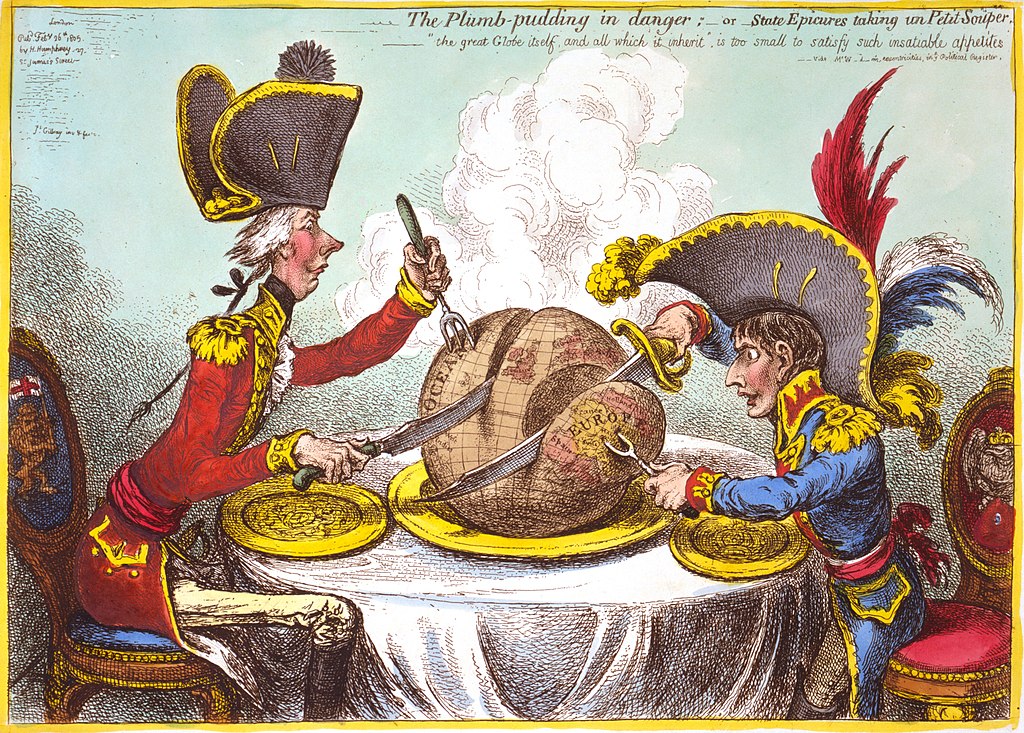
‘Can anybody play characters in service to Napoleon and think of themselves as the good guys?’

A gobsmacking comment (55 minutes in) from Mr Cule there, I thought -- not complaining; it’s for those comments that I especially love the show -- but presumably millions of people did follow Napoleon and definitely they thought of themselves as good guys. This interested me because a few days earlier I’d come across a note I made a few years ago:

‘Has anybody ever written a novel like Lord of the Rings but instead of being “good” vs “evil” in a generic sense, we actually get to hear the ideologies on each side? It is in effect left vs right, Dems vs GOP, or whatever.’

The thing is, that’s a very modern take on how people justify themselves. We expect to be presented with a manifesto and then pick a side. Or at any rate we think that’s how we pick a side, but other than William MacAskill and a few monks most of us really only pay lip service to these high ideals of ours, don’t we? ‘I’ve given up meat,’ we plead in our defence, while enjoying a comfortable life that three quarters of the world are denied.

As hypocrites we’re no worse than our ancestors. They would say they fought for God, but it’s funny how often God just happened to support their own country. Throughout the 18th century, most Christian groups other than Quakers were in favour of slavery. Freethinkers too; Tom Paine argued against slavery, but few of the Founding Fathers listened to him. In the French Revolution, most of the left-wing firebrands (if calling them left-wing means anything*) entirely overlooked equality for women. And "Kill them all; God will know His Own" and "Slay the pagans" show that total war and the butchering of civilians began with people who claimed to be fighting on the side of the angels.

The best we can say of most human beings is that they are basically good with a lot of blind spots. (And, yes, in that we must include ourselves.)

To return to the Napoleonic period, if we asked Marshal Ney why he considered himself a good guy I’m sure he’d talk about patriotism (admittedly a bit of a grey area for him), honour, and loyalty to the Emperor. I don’t suppose he’d cite the specific revolutionary aims he felt the Emperor stood for, though many at the time (even in England) did find that a reason to praise Napoleon, whereas nobody in the world would have declared support for the Houses of Hanover or Bourbon on the basis of their professed ideology.

So we can see a new era dawning at the start of the 19th century, one in which some men wouldn’t simply fight for tribal symbols like king, country or religion, but instead expected those to be backed up by specific principles chosen of their own free will.

Yeah, but did they, though? Was the USSR really a free federation of states based on egalitarian principles? Or was it the Russian Empire under a cloak of socialism? Did Mao whip up the Cultural Revolution to bring about a utopian society, or simply to shore up his own power? Did the average Wehrmacht soldier charge into battle to bring about a thousand-year Nazi reich or because he believed he was doing his duty for his country? Did any major world power ever march into Afghanistan in the interests of the Afghan people themselves? Or just because of their own geopolitical or economic needs?

Do people today decide disinterestedly which side to take in a dispute, or do they see which side their tribe takes and then find reasons to justify it?

The British used to be under no illusions about that. In the First Gulf War, US troops were given leaflets that explained why their cause was just. ‘Saddam has invaded a sovereign state and that is against international law,’ one GI explained on TV. The same camera crew interviewed a British squaddie, who had not been given any leaflet. ‘I got nothing against this Saddam bloke personally,’ he said, ‘but he’s in Kuwait and we been told to kick him out.’

So would it make sense to tell the story of a fantasy world, or any period in history, as if ideology actually made a difference? I don’t think so. This revisits an earlier post in which we discussed whether any non-modern society could usefully be described in modern terms. For example, SF writer Damien Walter posted a tirade about how the Spartans were fascists (he also calls them cowards and pederasts) but to try to squeeze them into a modern box like that is not only cultural chauvinism, it's plain dumb.

There was a bit of a pram fight a while back about "evil races" in D&D. Before the movies came out I assumed orcs were in fact supposed to be people just like the Gondorians (if that's the right word) and that Tolkien only described them as monstrous and evil because that's how "our" side saw them. I don't have any problem with utterly inimical species in fantasy. #NotAllDaleks? Gimme a break. But I think that's a less interesting way of looking at Lord of the Rings than my misconception.

Perhaps what we're seeing now is D&D moving beyond its simplistic good vs evil origins towards a more realistic kind of world. Characters (whether human or nonhuman) are not motivated by alignment in Tekumel or Glorantha, or even in Legend come to that (apart from the actual devils, that is). Instead they have desires, foibles, personalities, political alliances, and so forth that all contribute to how they behave. Where it gets messy with D&D is the game inherited its elves and orcs and whatnot from Tolkien, for whom good and evil meant something. If you want to create a more believable and nuanced world then great, but maybe better to start from scratch in that case.

In one sense, of course, simplistically framing a struggle as Good vs Evil might be the most honest way to describe any human conflict. You just have to remember that both sides think that they’re the good guys.


* Roger from Improvised Radio Theatre With Dice has pointed out that there's almost no better use of left- and right-wing, seeing as the terms came from the seating plan of the Estates General and later the National Convention. Touché, citoyen!

Friday, 13 July 2012

Story development for Frankenstein's Legions

For the last couple of weeks we've been looking at the Frankenstein's Legions game design document, which dates back to the late '90s when I was working alongside Martin McKenna on a bunch of games at Eidos, notably Plague, which later became Warrior Kings.

About a decade after we dreamt up Frankenstein's Legions, Martin and I had a go and rethinking the idea for comics. This got a little further along, and you can even find a link to part of the script here, but we soon found that the artists whom the comic book company had hired were not familiar with our Napoleonic Wars setting. Instead it was all massive Civil War sideburns and zombies torching Atlanta.

Well, if we learned one thing in big development teams it's how to be flexible. And, short of waiting for the long-promised Temeraire movie to come out, we couldn't see any way of bringing the (American) artists up to speed. So we started thinking about how we could move the whole caboodle over to the US during the 1860s. Here's the first of two story development documents that might interest you if you want to find out what a lot of iceberg goes under the surface of the comic book, movie or game that you get to see.

* * *

Frankenstein's Legions: US Civil War story notes

In the treatment, the setting was Napoleonic Europe and there were two distinct threats. First, the left-wing revolutionaries of the French government (kind of Khmer Rouge extremist communists, if you like!) were willing to use the Frankenstein tech in really horrible ways: grafting human heads onto giant eels, dog heads onto human bodies, etc. In real life, those were the same guys who invented industrialized executions 150 years before the Holocaust, so it makes sense they would blithely authorize experiments that would horrify any normal person.

I wanted that because we have a world in which horrific things are happening - the dead being brought back to life to serve as slaves and soldiers. So pretty soon that becomes the new status quo and we need something even more horrific, like creating hybrid monsters, to define our bad guys for whom fanatical logic dictates the unthinkable.

Secondly I had Napoleon as a personified bad guy. The French revolutionary government sent a commando team to bring his body back from St Helena, where he died in a British prison. After being restored to life, he had to be kept in a tank of preservative chemicals because he'd been in the grave a while. He was slowly recovering his memory, so whereas the fanatics thought they'd just acquired a kind of military strategy computer, they didn't reckon on him hatching plans to overthrow them.

I needed both those elements, the fanatics as a group and Napoleon as an individual, because the story couldn't just be "the Brits are good, the French are evil". Both sides use the Frankenstein tech, and the villains are individuals or creeds who go a step further. I think you'll need to keep this idea in the Civil War version. Most Confederates were not evil racist autocrats; most Unionists were not fighting like paladins with the lofty goal of emancipating the slaves. There is good and bad on both sides. You may need an equivalent mythic figure to Napoleon (perhaps from the War of Independence? though I guess the world has had few dictators of Napoleon’s calibre) and an equivalent to the extremist fanatics of the French revolutionary government. It needs to be a creed, not just a few mad scientists. Maybe a crazed cult who believe God has authorized a new Eden on Earth and it's okay for mankind to play around creating abominations.

Incidentally one of the key ideas in Frankenstein's Legions is that you aren't just brought back to life by the technology. When you get off the slab, you don't know who you are. It's a new you. Like Frankenstein's monster - he didn't think, "Oh, my brain came from a criminal who was hanged" or whatever. The brain got rebooted, so in a sense it's a newborn person getting off that slab. Lazarans are like amnesiacs in that they know the skills they had before – how to shoot a gun or play the piano, how to speak – but specific personal memories are lost. The tragedy is that they may encounter their loved ones, but they don't remember them. There may be snatches of memory, that's all.

So the search to recover memories is one way a resurrected character may go. Another might want to shun anything to do with who he used to be: "today is the first day of the rest of my life". Interesting character tensions.

As far as the artwork we've seen so far, it's important that the lazarans don't look like zombies. I'm sure there are a whole bunch of Civil War zombie books out there already, and we need to be brandably distinct. A resurrected guy may have scars if he was stitched together from separate parts, so some of the ones who've been resurrected many times could be quite monstrous: hands or arms out of proportion, different skin tones, asymmetric bodies, etc. Others who died a clean death could look almost normal. Almost. Here is Mary Shelley's description of the original creature:
I had selected his features as beautiful. Beautiful! Great God! His yellow skin scarcely covered the work of muscles and arteries beneath; his hair was of a lustrous black, and flowing; his teeth of a pearly whiteness; but these luxuriances only formed a more horrid contrast with his watery eyes, that seemed almost of the same colour as the dun-white sockets in which they  were set, his shrivelled complexion and straight black lips.
I like the idea that such a face, with skin taut on the veins and muscles, could be both ugly and beautiful at the same time. In some cases, the yellowish skin colour (caused by their differently colored blood) might be the only sign at first glance that the person is a lazaran. Most certainly they aren't undead – the opposite, in fact: full of vigor, intimidating to ordinary men because of their raw energy and animal strength. They are the homo superior of their time, and it's only a matter of time before we see a lazaran Magneto, or even some people who are willing to kill themselves in order to get the enhanced strength, speed and senses that come with resurrection.

Okay, so back to that prologue. A raid on a remote farmhouse where lazaran hybrids are being created? Or perhaps a cult who have their own unique interpretation of Revelation 20:6:
Blessed and holy are those who have part in the first resurrection. The second death has no power over them, but they will be priests of the Lord and will reign with him for a thousand years.
So these cultists are deliberately committing suicide, performing surgery to enhance the bodies, and resurrecting each other as the new "chosen ones" who believe they're going to reign for a thousand years. (Obviously you'd need to have some normal, sane preachers on the good guys' side to show that this cult is a definite aberration!) We start with a small band of Civil War deserters looking to raid a remote homestead. They sneak inside, bit of banter, the place seems deserted – then they are picked off one by one, fast like Alien, and that pre-title sequence ends with the last of them being leapt at by a horrible hybrid: human head, wolf-like body, serpents growing out of its back or whatever. Let Martin have some fun here! Then cut to the opening we have already, a quieter scene with a family pushing the body of their loved one in a cart.