Gamebook store

Friday, 25 April 2025

"The Girl King" (a one-shot Arthurian scenario)

This is a very brief idea that I jotted down as an adventure seed, intending one day to develop it more fully as a one-shot scenario. If you're planning a mini-campaign then with careful watering it could grow into that.

The inciting incident is that time travellers arrive in the Arthurian age and fake the sword in the stone incident to make their candidate the King of Britain. So all the knights turn up to draw the sword, but before young Arthur gets his chance the time travellers use some kind of tech (laser drilling, hologram, whatever) so that their candidate (who happens to be a young woman) draws it.

Some of the player-characters should know what went on; others think it’s genuine. You'll need to give the former group a reason not to share the info right away. Maybe they saw the girl (let's call her Moira; Gwen would be signposting too much) with a group of strange folk with a weird device, and then when she steps forward and whips the sword out of the stone they suspect wizardry.

So Arthur remains a squire – but maybe nonetheless the best candidate, as after all he's the rightful King. Even though Moira champions a bunch of very worthy causes: feminism, tolerance, fair distribution of wealth, and so on, she isn't of this time. Good intentions alone aren't enough. Maybe she knows what needs doing but Arthur is the one who can actually do it.

The time travellers? I hadn't given them much thought, but that could be where Nimue and Viviane come into the picture. I envisage them as rather like management consultants, coming in with lots of ideas (some of them good) about how to improve society, but without the lifelong hands-on experience of the people who actually grew up here.

Ideally the adventure shouldn't come down too hard one way or the other between Moira and Arthur. This is two “good guys” in conflict (assuming that Arthur is ever made aware of the truth) while the real antagonist is the wretched status quo that both would like to fix. (If you want to embody all the problems in one figurehead villain, you could use King Claudas in league with the invading Saxons.) Perhaps by combining their strengths (insight into the future on one side, leadership on the other) Moira and Arthur can make it work -- but arranging that alliance will be up to the players.

Overview

A caveat first about structuring this scenario in three acts. For a one-shot, all right, I'll admit it does help to conceive of the narrative flow in advance, because you can't rely on players who have only just created their characters to get the wind in their sails and take things off in an entirely unexpected direction. But I still insist that applying the self-consciously authorial approach of act breaks and plot points to an extended campaign is selling roleplaying short. The best stories are not constrained to the shape of a Hollywood script paradigm or (essentially the same thing) a management memo. So you can imagine me gritting my teeth as we break the scenario down in this way.

OK, this one-shot adventure unfolds over three acts with room for subplots and player improvisation. It balances intrigue, ethical dilemmas, and action, while allowing players to shape the outcome. As far as rules are concerned I would probably opt for GURPS 4e but have given stats below for Pendragon because -- well, it would be rude not to.

Most of the player-characters should be native to the Arthurian setting (envisaged as more or less 5th century AD Britain) but if you have a large enough group then one PC could be part of the time travelling group (see below). The characters have not met each other before assembling at the stone to watch knights trying to draw the sword on May Day. (Traditionally the ceremony is at Christmas or New Year, but I think the year ought to start in spring and in any case it fits better with the rapid progression to possible open warfare.)

The time travellers are operating covertly and so are dressed in clothing appropriate to this era. They portray themselves as French to explain differences in manner, accent, and so on. Moira, although one of the time travellers, affects to be from northern Britain and pretends not to know them. Moira could be a player-character, and as it’s a one-shot the other players will not know that she’s from another time.

Act I: The Sword in the Stone

Scene 1: Gathering at the Stone

Nobles, knights, and squires gather to witness the attempt to draw the sword. This is an annual event. Arthur, still Ector’s squire, is present, as are Moira and the other disguised time travellers. 

Other knights try and fail to draw the sword from the stone. Before Arthur gets to try, Moira draws the sword with subtle tech assistance (holograms or a device concealed in the stone). 

Observant player-characters might notice these clues that something untoward is going on: 

  • A faint glow or mechanical sound as Moira draws the sword. 
  • A brief glimpse of the time travellers' unusual tools or attire. 
  • Moira’s initial hesitation or a whispered exchange with her “advisors” – as she is supposedly a Briton and they recently arrived from France, she isn’t supposed to know them but is clearly familiar.

Scene 2: Reactions and Rifts

Ector and Kay are puzzled; Merlin told them Arthur was the true-born king. 

Arthur is privately disappointed but outwardly supportive; he has not yet learned he is Uther Pendragon’s son. Ector could reveal that to one of the player-characters, or they could overhear him telling Kay, making them privy to an important secret.

King Claudas, if present, sees an opportunity to sow dissent. 

The player-characters have choices to make:

  • Investigate the strange occurrence. 
  • Align with Moira, Arthur, or remain neutral. 
  • Gather information on the time travellers.

Act II: Seeds of Doubt

Scene 1: The Truth Unveiled 

The characters may uncover evidence of time travel:

  • Physical Evidence: A discarded high-tech tool (which will seem sorcerous to them). 
  • Eyewitnesses: A peasant saw “those foreigners” working some strange magic when Moira went to draw the sword. 
  • Dialogue: Perhaps Moira (if an NPC) confides in a trusted PC, revealing her mission.

Scene 2: Political Manoeuvring 

Moira promotes progressive reforms, gaining followers but also resistance. 

Arthur earns quiet support among traditionalists and those who value his character. However, Arthur himself may be reluctant to go along with his more ardent followers, as he values stability over personal ambition.

King Claudas and his Saxon allies exploit the division. Meanwhile, British nobles jockey for power, complicating alliances.

Scene 3: Merlin and Nimue’s Role

The time travellers (Nimue, Viviane, Moira and Bedivere) aim to guide history toward their vision but lack subtlety. But over time Bedivere and Viviane begin to admire Arthur’s potential, putting them in conflict with Nimue. They recognize that Moira, as a person of their own era, can have exemplary goals but lacks the cultural understanding to implement them. Possibly it would be better to deal with Arthur and try to influence him. They approach the player-characters, offering alliances or rewards to get them to act as intermediaries with Arthur.

The PCs must decide whether to expose Moira, back her, or support Arthur. Some of them might also want to leverage Nimue’s technology for their own goals.

Act III: The Saxon Threat

Scene 1: A Common Enemy 

The Saxons, aided by Claudas, launch a major attack. Moira and Arthur must unite their factions or risk annihilation. 

Several challenges confront the characters:

  • Can they convince Moira and Arthur to cooperate despite their differences? 
  • Can they rally disillusioned knights and commoners?
  • How will they navigate betrayals among the nobles?
  • Can they convince Arthur he must oppose the new "lawfully chosen" monarch?

Scene 2: The Final Battle 

This is the climactic encounter. The characters may take leadership or advisory roles, directing troops, or they might be sent on missions involving personal combat. Meanwhile the time travellers attempt to intervene with technology from their era, risking exposure. 

Ideally Moira and Arthur will combine their strengths, or else one takes the lead. The characters’ choices should determine whether Britain emerges united or fractured.

Key NPCs 

Arthur (17 years old): Humble, capable, and destined, though initially unsure of himself. 

Moira (18): Charismatic and forward-thinking, but arrogant and inexperienced in medieval leadership. Like her fellow time travellers she comes from the 25th century, where she is a D.Phil student in Temporal Studies & Interpretive Dance at Grainer College, University of Derby. Her real name is Jennie Hill.

Nimue (33), Viviane (37) and Bedivere (36): Moira’s fellow time travellers with advanced knowledge but limited cultural understanding. Their real names are Roberta Ford, Karen Darvill, and Roy Russell.

Ector (38): A steadfast and pragmatic guardian, torn between loyalty to Arthur and the knowledge that the kingdom needs stability.

Kay (19): Often brash and proud. He might resent Arthur or Moira’s rise and seek a way to distinguish himself. Ultimately, however, he is loyal to Arthur and will redeem himself.

Leodegrance (35): A noble supporter of the "rightful" monarch, potentially split between Moira’s apparent legitimacy and Arthur’s vision and destiny. His ties to Camelot could influence the players' choices and alliances.: 

King Claudas (31): A manipulative villain embodying the era’s worst traits.

Where is Merlin while all this is going on?

Nimue has trapped him in a “in a stone” (some kind of multidimensional matrix) or in cryogenic sleep. The implications of his imprisonment are: 

  • Players may have the option to rescue Merlin, but doing so could risk coming into direct conflict with the time travellers. 
  • If Merlin gets free he prefers to let events play out so as to to test Arthur and discover the time travellers' intentions. He might take the guise of a hermit, bard, or commoner. 
  • Merlin could act as a distant advisor, communicating through dreams, omens, or letters. This approach lets the player-characters and major NPCs take centre stage, while Merlin remains an enigmatic presence. 

Here are some enemy knight stats compatible with the Pendragon RPG, with the proviso that I haven't played Pendragon in decades so am not rock-solid about the rules.

Generic Enemy Knight (competent but average)

  • SIZ: 14 
  • DEX: 9 
  • STR: 13 
  • CON: 13 
  • APP: 10 
  • Damage: 5d6 
  • Hit Points: 27 
  • Major Skills: 
    • Sword: 15 
    • Lance: 12 
    • Horsemanship: 13 
    • Awareness: 10 
    • Battle: 8 
  • Armor: Chainmail (10 points), shield (+6 points if used). 
  • Personality Traits: 
    • Valorous: 14 
    • Proud: 13 
    • Reckless: 10

Tactics: Such knights rely on straightforward combat techniques, usually charging with a lance before switching to sword and shield. They are loyal but lack deep cunning.

Elite Enemy Knight (a dangerous adversary) 

  • SIZ: 15 
  • DEX: 12 
  • STR: 14 
  • CON: 14 
  • APP: 12 
  • Damage: 5d6 
  • Hit Points: 29 
  • Major Skills: 
    • Sword: 18 
    • Lance: 16 
    • Horsemanship: 16 
    • Awareness: 12 
    • Battle: 10 
    • First Aid: 10 
  • Armor: Chainmail (10 points), shield (+6 points if used). 
  • Personality Traits: 
    • Valorous: 16 
    • Proud: 15 
    • Honorable: 12

Tactics: An elite knight uses disciplined tactics, coordinating with allies and exploiting openings. He might dismount to fight in difficult terrain or switch to defensive play if wounded.

Sir Gerlach, Knight of King Claudas (named enemy NPC) 

Sir Gerlach is one of King Claudas’s most trusted knights, known for his ruthlessness and cunning. He is fiercely loyal to Claudas and harbours disdain for the ideals of chivalry espoused by Arthur’s circle. He could be a recurring antagonist, leading the Saxons’ elite forces or acting as Claudas’s enforcer. He might confront Arthur or Moira directly, forcing the players to intervene. His weakness is that he is fearful of sorcery -- which would include, in his eyes, any of the time travellers' "sufficiently advanced technology".

  • SIZ: 16 
  • DEX: 10 
  • STR: 15 
  • CON: 14 
  • APP: 8 
  • Damage: 6d6 
  • Hit Points: 30 
  • Major Skills: 
    • Sword: 19 
    • Lance: 15 
    • Horsemanship: 14 
    • Awareness: 14 
    • Battle: 13 
    • Intrigue: 11 
  • Armor: Chainmail (10 points), shield (+6 points if used). 
  • Personality Traits: 
    • Valorous: 15 
    • Cruel: 14 
    • Reckless: 13 
    • Deceitful: 12

Reputation: 1,000 Glory

Tactics: Sir Gerlach is a brawler who fights to win, not to preserve honour. He uses feints and dirty tactics such as attacking an enemy’s horse or taking hostages. His reputation might intimidate less-experienced knights.

(A different version of this adventure was originally published on my Patreon page.)

Thursday, 24 April 2025

The Horned Ram

2025 is the 40th anniversary of Dragon Warriors, and we can trust Red Ruin Publishing to mark that with some of their usual high-quality scenarios and gamebooks. Here's The Horned Ram, a solo adventure for an assassin, by Paul Partington. You're out of cash and out of luck when you get offered the job of 'reclaiming' a lost gem that may be in the hands of a religious group. What could possibly go wrong..?

Friday, 18 April 2025

Credit where it's due

Originally published in 1985, Dragon Warriors returned in 2008 in a deluxe hardback edition. Here is my foreword to that volume:

As Dragon Warriors is coming up to its quarter century, it’s now almost as venerable as those classic original role-playing games—Dungeons & Dragons, RuneQuest, Traveller—in whose company it was once a cheeky whippersnapper.

Those who enjoy Dragon Warriors respond to something unique about it. Which sets us to wondering: what is the essence of Dragon Warriors? Most certainly that essence doesn’t lie in armour bypass rolls or other game mechanics. Indeed, the best Legend campaigns we’ve played in have used the GURPS system. And the rules mean nothing to those who live in the Dragon Warriors world, for whom ‘mystic’ and ‘warlock’ and ‘sorcerer’ are all interchangeable shorthand for a guy you really should steer well clear of.

So, is DW then defined by the world of Legend? We think not. Some of the great role-playing games are completely identified with an entire fantasy sub-creation. Tekumel and Glorantha spring to mind. The world of Legend, on the other hand, was always intended to be this world—only skewed.

Some parts are closer to the 10th century, others to the 14th, but the point was always to create a backdrop that would be recognizably and convincingly medieval. It was never about creating a place that was alien and strange. The familiarity of Legend is what gives players freedom to create their own stories there.

Not rules nor setting details, then. From a personal perspective, the important thing for us has always been the flavour. That, for us, is the essence of Dragon Warriors. Our aim was to put something dark, spooky and magical back into fantasy role-playing. Loathing the medieval Disneyland of Dungeons & Dragons, with its theme-park taverns, comedy dwarves and cannon-fodder profusion of monsters, we made Legend as vividly dreamlike as the Middle Ages seem in stories, a place dripping with a European folktale sensibility. The flavour of what fantasy ought to be.

In Legend, faerie creatures are as amoral as cats and as heartless as children. A goblin in the rafters can spoil a whole night’s sleep, while a troll under the bridge ahead is reason to change your travel plans. And these creatures are rare. Walking into a tavern in Legend and finding an elf at the bar would be like strolling into your real-life local and seeing a polar bear.

This is a world in which human emotion is just as strong as magic. The scenario ‘A Box of Old Bones’, which originally appeared in White Dwarf magazine in 1985 and which is bound to re-emerge before long, makes it clear that the miracles associated with holy relics are sufficiently rare and vaguely manifested that a fake relic can go unnoticed for years, getting by on the strength of its placebo effect and the willingness of clergy and believers to collude in seeing evidence where they want to see it. Our rule was never to evoke magic if a non-supernatural plot point would do.

Fantasy games like D&D—or, these days, World of Warcraft—belong to the George Lucas or Chris Columbus branch of role-playing. Dragon Warriors would be a movie by Guillermo del Toro or Tim Burton. In literary terms, if D&D is Eragon, then DW is Jonathan Strange & Mr Norrell. Now that the righteous passion of youth is mellowed somewhat, we see that neither approach is right or wrong. Fantasy has room for all flavours. Take your pick.

Turning now to thanks, regrets, and reminiscences… Dragon Warriors owes its existence to Ian Livingstone and Steve Jackson, whose brainwave was to see that role-playing could be smuggled into bookshops. We were never that interested in solo gamebooks, but as soon as we saw the first Fighting Fantasy book we started planning the pitch for Dragon Warriors.

The game system too owes a debt to Livingstone and Jackson, interestingly enough. We had self-published a little RPG called Mortal Combat in the late 1970s. This came to the attention of Games Workshop, with whom we discussed a UK rival to D&D. Workshop’s working title for this was ‘Adventure’. The deal never happened, but it gave us an excuse to focus our role-playing sessions towards creating a set of rules and a world (in fact, several worlds) that ultimately evolved into Dragon Warriors.

With hindsight, there are things we would do differently. Oliver always argued strenuously against polyhedral dice, but Dave resisted a pure d6-based system—wrongly, as he now admits. As the whole point of Dragon Warriors was to be accessible to everybody, the low price-point of the books was pretty much invalidated when you had to go searching for twelve-sided dice. Democratization of the dice supply would also have helped to break the authority of the GamesMaster—a term we abhor, preferring ‘umpire’ or ‘referee’ as more indicative of the group story-creation that we feel good roleplaying should be.

Philippa Dickinson, our editor at Transworld, recognized that role-playing broke the normal publishing rules about age groups. That’s why the original DW books showed no sign of being targeted at 11-15 year olds, even though those were almost certainly our main market. We played it ourselves, after all, and our friends—and we were twentysomethings, as I hope were many of those who bought the books first time round.

Completists may wonder what other DW books are out there. We used Legend as the setting for our Blood Sword series of gamebooks (Knight Books, 1987-88), where we elaborated the end-of-time storyline that hangs over the world as the year 1000 approaches. Later, some of the story threads in Blood Sword were used for three novellas called The Chronicles of the Magi (Hodder, 1997). We’re still not sure if we consider Blood Sword to be canonical— or whether the year 1000 would really pass in Legend with much hysteria, and not a little magical mischief, but maybe sans the direct intervention of God Almighty. The flavour of DW can be grim and horrific as well as whimsical, but such grimness is usually on a personal level. A character’s soul can be in peril, lives can be threatened by treachery, individuals can be torn by loyalties and inner conflicts. And yet, in a Legend campaign, it is not usually the fate of the world that hangs in the balance. Not merely the fate of the world, at any rate.

At the risk of evoking comparison with Robert E Howard’s estate, whose discovery of new stories seems almost to have dwarfed Howard’s output while alive, there was also an entire world of DW rules and adventures, much more extensive than in the original six books. This is the Invaders & Ancients book, which was to have been incorporated into Chaosium’s Questworld project. When that deal failed to come about, we reworked the material into a massive sourcebook, called Ophis, that would have comprised some of DW books 7-12.

If you’re interested, a little glimpse of that continent of Ophis features in Shadowline: The Art of Iain McCaig (Insight, 2008). But that is all there is, alas, as in those days we did our work in nonelectronic form. The manuscript may have taken the train to Dumfries or been used to lay the cornerstone of a church or used to light a fire on an especially cold winter’s night—all those fates that the one and only copies of things are wont to suffer. But, like life, the loss is what makes the rest of it so precious.

For the resurrection of Dragon Warriors we particularly want to thank James Wallis, who needs no introduction as one of the great luminaries of gaming. We are honoured that Dragon Warriors is appearing as one of the first publications of Magnum Opus Press, and grateful to James for lavishing such attention to make it a truly mouth-watering edition. We also must thank Ian Sturrock for editing, revising and improving our original material into a new edition for a new era of gaming.

And we are most grateful to have such excellent companions in our ongoing exploration of Legend— in particular Steve Foster and Tim Harford. Steve has been with us from the very beginning, designed Mortal Combat and in fact originated several of the most colourful characters of the Dragon Warriors world including Tobias of the Knights Capellar and arch-wizard Cynewulf Magister. Tim has woven some of the eeriest, most exciting and most affecting campaigns of Ellesland and enhanced it immeasurably with his ideas. Along with them, we are privileged to have adventured with Aaron Fortune, Paul Gilham, Frazer Payne and Tim Savin—heroes of Legend, dear friends, stalwarts all.

Returning to it another seventeen years on, what would I add? First I'd have to reiterate my thanks to James Wallis. He had the idea of bringing Dragon Warriors back, assembled the very best team of writers, artists and editors for the job, and produced a stunningly beautiful series of books. Without him, DW would probably still be languishing in semi-oblivion.

I'm grateful to Lee Barklam for keeping the flame alight with his Cobwebbed Forest site, where you can find maps, scenarios, source material and links to other DW resources. Likewise profound and profuse thanks to Shaun Hately not only for The Library of Hiabuor but also for his contributions to DW lore as a writer. Along those lines, Red Ruin Publishing have continued James Wallis's work as a labour of love, producing Casket of Fays (not fey, please note; one is a noun, the other an adjective) and a number of fine scenarios and solo books (of which The Horned Ram by Paul Partington is the latest).

And I mustn't miss out the folks at Alkonost, who are not only bringing Dragon Warriors back in a French edition (Les Terres de Légende, that is) but are also publishing two all-new volumes. With more focus on the social and political aspects of the game than on old-style dungeon bashes, we can really say Alkonost are ushering DW into the 21st century.

Published game sessions, both audio and video, have helped spread awareness of Dragon Warriors, and I'm particularly indebted to Grim Jim Desborough and Roger Bell-West for making their games available online.

It would be remiss of me not to thank the artists who have brought Legend to life. I'm convinced that Jon Hodgson has visited Legend often; his illustrations seem to have come direct from my and Oliver's dreams. In the early days we benefited from the work of Bob Harvey, Leo Hartas, Russ Nicholson and Alan Craddock. And here is an especially beautiful map of Legend by Patrick Crusiau. There are many others, and we salute them all.

Wednesday, 16 April 2025

"An irresistible fate. A weird..."

I don't think I need to add anything, do I? The trailer says it all, but here's a little bit more to whet your appetite, along with the product page on Steam. Everyone who has played Prime Games' incredible Fabled Lands CRPG will be excited to hear that the Blood Sword game is going to be even bigger and better. Stay tuned, as I'll have a lot more to tell you in the weeks ahead.

And while we're on the subject of exciting upcoming releases, I'll just add:

01101000 01110100 01110100 01110000 01110011 00111010 00101111 00101111 01110111 01101000 01101001 01110011 01110000 01100101 01110010 01110011 00101101 01100010 01100101 01111001 01101111 01101110 01100100 00101110 01110011 01110000 01100001 01100011 01100101 00101111 

Make of it what you will!

Friday, 11 April 2025

Roots & Claws

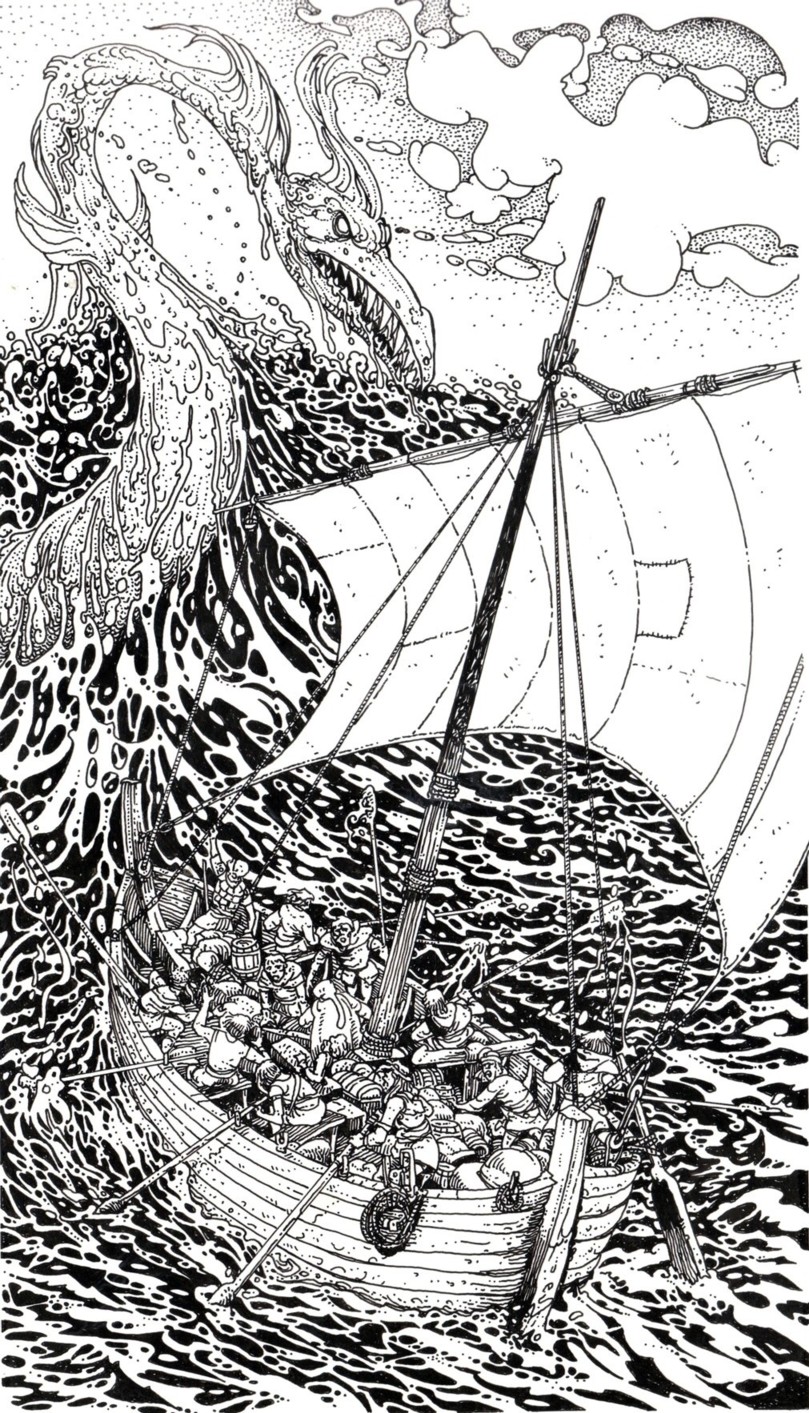
One for the diehard Fabled Lands players this week, as I came across the original titles that Jamie and I were considering for the later books in the series. We must have drawn up this list right after writing FL books 1 and 2. The books up for discussion, clockwise from top left, later became known as Over the Blood-Dark Sea (book 3), The Serpent King's Domain (book 7), The Plains of Howling Darkness (book 4) and The Legions of the Labyrinth (book 10, still unpublished).

I've already recounted our struggles to get the publisher to accept Devils & Howling Darkness as the title of book 4, but WH Smith's were worried that any mention of devils might scandalize fundamentalist religious groups. Jamie and I didn't think they'd buy the FL books anyway, but we argued the point in vain.

The notes refer to our editor, Ian Marsh, who also helmed the Virtual Reality gamebook series. I believe he also digitally typeset the books, though I don't suppose the publishers paid him anything extra for doing that.

My biggest regret here (other than the book 4 title) was not being able to use The Blood-Dimmed Tide for book 3. Jamie and I are both fans of Yeats, as you will have noticed if you read The Chronicles of the Magi novellas -- but there I had to pay out of my own pocket to use the poem, because Yeats's work didn't enter public domain till 2009, and we'd have hit the same problem with FL book 3. So we borrowed a line from Homer instead (oînops póntos) and took liberties with it: haîmops póntos, I suppose it would be, "the blood-eyed sea". Given that the book takes place on the Violet Ocean, maybe wine-coloured would have been a better fit.

Wednesday, 9 April 2025

No BS

As sure as men walked on the Moon, we now have incontrovertible evidence that the English edition of Blood Sword 5e exists. One of my gaming pals sent me this photo of the pack he just received. Others in our roleplaying group confirmed they also got their copies, and I'm hoping at least one of them will try running the campaign for their kids.

As to whether the book will be available to non-Kickstarter backers -- well, yes, that would make sense, 5e reputedly being a popular choice of rules, and it's a beautiful volume with detailed spells like Fairy Stride, Pillar of Salt, and (of course) Summon Faltyn, along with monastic orders, character backstories and birthmarks, guilds, blood feats, monsters, rules for magic items, colour maps of places like Crescentium, Sheol and Spyte -- along with lots of Russ Nicholson's best work, all on glossy high-quality art paper, and of course the whole Blood Sword saga converted to a 5e campaign.

It really is a labour of love by the creative team involved, and what I find most interesting is seeing a version of the lands of Legend that draws solely on the Blood Sword books and not on Dragon Warriors. This high-fantasy Legend is a very different place from the world of DW and Jewelspider, but no less brilliantly conceived and inspiring for that. I'm awed, flattered and humbled by the care Valentino Sergi and his team have put into every aspect of the design. In the ongoing absence of new official DW material, Legend players could do worse than embark on a Blood Sword 5e campaign.

How to buy a copy? You could try contacting the publishers, Tambù, but I suspect after two and a half years they've got other priorities. Maybe they'll license a paperback edition if enough people ask. For those who want to roleplay in the Blood Sword universe but simply can't get the 5e book, Oliver Whawell has converted the encounters to Dragon Warriors rules. Download those here:


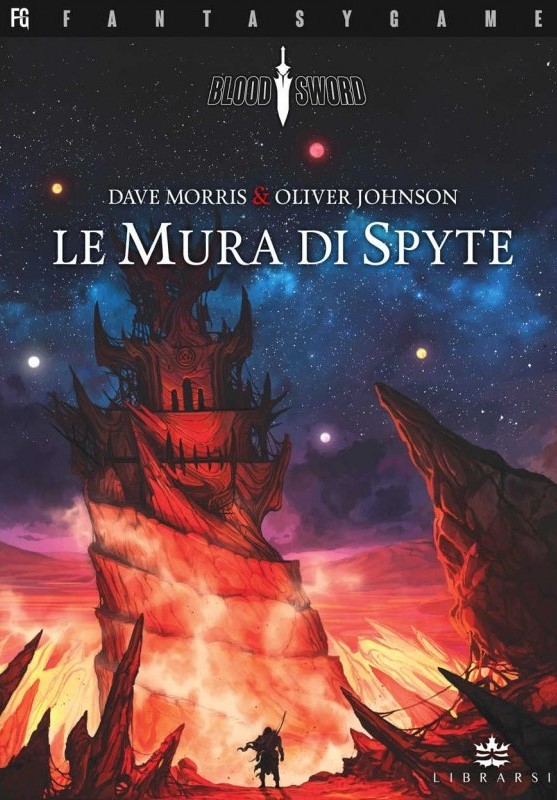
My backers on Patreon got to see how I'd have written that final book, a more flashback-heavy, character-focused version that would probably be a better fit for a roleplaying campaign than the dungeon crawl that actually got published. And talking of book 5, Edizioni Librarsi have just published an all-new edition (based on my revised text of 2019) with a gorgeous Mattia Simone cover showing the Ghosts of the Magi in ominous conjunction on the last night of the world. (The hopes and fears of all the years...)


If you need maps of Legend, there's a wealth of cartographic treasures freely available on Lee Barklam's site The Cobwebbed Forest. And there will be some truly scrumptious maps in the forthcoming Blood Sword CRPG -- but now I'm getting ahead of myself. More news on that to come. Oh, and if all the above is like a coded message in Cabbandari and you're asking what Blood Sword even is, here's a podcast review by Mr H J Doom to get started.

Friday, 4 April 2025

The same cigarettes as me

So I'm not the only one irked by seeing modern characters popping up in period dramas. I don't know who writes the Movie Media Hub posts on Facebook, but I'm with them on this point. Not specifically feminist characters, though: any character whose function is to spout modern attitudes a few centuries ahead of their time.

I disagree about why such characters are inserted into stories. There are multiple reasons. Most obviously, it's a way for a lazy writer to get laughs. "Heh heh, it's Victorian times but Holmes just said 'OK Boomer'." Ursula K Le Guin griped about fantasy writers who put contemporary American slang into their heroes' mouths:

"...Since fantasy is seldom taken seriously at this particular era in this country, they are afraid to take it seriously. They don’t want to be caught believing in their own creations, getting all worked up about imaginary things; and so their humor becomes self-mocking, self-destructive. Their gods and heroes keep turning aside to look out of the book at you and whisper, “See, we're really just plain folks." '

It happens because some audiences are easily pleased. They are asking, as Oscar Wilde put it, for art "to please their want of taste, to flatter their absurd vanity, to tell them what they have been told before, to show them what they ought to be tired of seeing, to amuse them when they feel heavy after eating too much, and to distract their thoughts when they are wearied of their own stupidity."

Anachronism is also a quick and easy way to get the audience on-side with a character. How can you not root for the guy who's denouncing slavery in the 18th century? Well, there were indeed plenty of people denouncing slavery back then, and a good thing too, but if you are going to put them in a script they shouldn't talk like 21st century characters. Unlike us today, they exist in a world where it apparently wasn't obvious to everyone that enslaving another human being was a monstrous crime. And even if you get the mindset and the dialogue right, it's still a lazy way to create rooting interest. Consider first whether you need to start with a hero whose every attitude is right-on. We were talking about the superfluity of likeable characters in a recent post and, as a great storyteller once pointed out, it is more satisfying to see one sinner that repenteth than ninety-nine decent characters who need no repentance.

Mainly, though, I detest this trope because of its cultural chauvinism. If somebody is interested in a story with an historical and/or non-Western setting, what is the point of inserting modern Western characters? You may say we can't fully know how people in such settings would see the world. Equally, we can't all be as selfless as the Buddha but that doesn't stop us giving money to charity. We make an effort at all sorts of things we can't hope to do perfectly, so why not storytelling or roleplaying? We do know that a farmer in medieval Iceland won't share the attitudes of people at a TED talk. If we want the farmer to make a stand for something we believe in today, we should look for a way he'd credibly conceive of and frame that in the context of his times. In writing or playing such a character, we can find stepping stones that help us imagine their interior life, for example using a process that Robert Graves called analeptic mimesis, effectively taking what you know of a time and place and dreaming it back into existence. That is true even in a fantasy story, as long as it's a fantasy setting where somebody has thought out some of the culture and economics that shape it.

In his book Medieval Horizons, Dr Ian Mortimer contrasts historical accuracy with historical authenticity:

"We impose our own prejudices on the past and reinvent it as 'how it must have been' to conform with our outlook. To appeal to a modern audience, therefore, a medieval heroine in a book or film must be shown as having control over her own life. Alternatively, she must appear constantly fighting her oppressors. Male peasants must similarly include at least once plucky, Robin Hood-like character who leads the others in defying authority. The result is a reproduction of modern society draped in medieval clothing." 

It might be an interesting exercise to write a modern drama but insert one character with the (imagined) attitudes of somebody from the 23rd century. Presumably even the least demanding audience member would spot something amiss then. And how would they take to having their currently fashionable beliefs scorned as antediluvian and even toxic by some supercilious git from the future?

Of course, your tastes may vary. Looking for fiction or games set in the early 19th century, do you want Middlemarch and War & Peace -- or, alternatively, are you looking for Bridgerton? Taking an imaginative leap into another society, or just dressing-up in period costume? Now you know where I stand. Still, those Regency greatcoats are jolly tempting.