Gamebook store

Showing posts with label Can You Brexit. Show all posts

Friday, 4 September 2026

On the road

Suppose you’re writing a gamebook and you want the player to be able to travel from Wishport to Haggart’s Corner on this map. In its simplest form that would require a section (A) for Wishport, a section describing travel on the road (D) with possible side encounters, and a section (F) for arriving at Haggart’s Corner.

In an open-world gamebook it gets a bit more involved. Now you might be travelling on that same stretch of road either north to Haggart’s Corner, or in the other direction south to Wishport. In Fabled Lands we wanted to have random encounters occur when the player is travelling, so we needed a section (C) to handle those. Each encounter could be an entire side-adventure, though the two in this example are both very short. Once the encounters are resolved, or if you didn’t get an encounter, you’re routed to section D and can decide which way to head. Like this:

A

Wishport is a picturesque town set at the back of a bay rimmed by white cliffs. Fish, oil, dyes and other commodities are packed here for transport inland. You can buy a town house here for 100 Shards. If you decide to do that, cross off the money and put a tick in the box by the town house option below.

[Various options in the town]         …

Leave Wishport                           turn to B                  

B

From Wishport, you have the option to put to sea, take the road to Haggart's Corner, or travel cross-country. In order to go by sea, you must either possess a ship which is docked in the harbour (check the Ship's Manifest) or find a captain who is willing to take you as a passenger.

Go to the harbour                                 turn to ---

Take the road north                              turn to C

Go west towards Metriciens               turn to ---
    Go east into the Magwort Fens           turn to ---

C

The road follows the ridge of low hills extending out into the headland of Knucklebones Point.

Roll two dice for encounters:

Score 2-5         Eerie things                            turn to X

Score 6-8         Uneventful journey              turn to D

Score 9-12       Penniless adventurers          turn to Y


D

You are on the road between Wishport and Haggart's Corner.

Follow the road to Wishport              turn to A

Go north to Haggart's Corner             turn to E

Go due south towards the coast          turn to ---

Go east into the Magwort Fens           turn to ---

E

The town of Haggart's Corner stands at a place where three roads meet. Here, in certain seasons of the year, the trau are said to come and trade their marvellous trinkets in exchange for human favours.

Stop at Haggart's Corner            turn to F

Continue on your journey          turn to G

F

Haggart's Corner is a pretty, pastel-hued town. Houses with high gables and mullioned bay windows are set around a series of courts where fountains splash dreamily in the sunlight.

[Various options in the town]         …

Leave Haggart's Corner              turn to G

G

The fey, sleepy, whimsy-tainted air of Haggart's Corner is soon forgotten as you turn your face to the wind and journey onwards.

Take the road to Metriciens                turn to ---

Head to the Monastery of Molhern    turn to ---

Take the road to Wishport                  turn to C

X

Misshapen sprites with grotesque faces come scampering out of the hedge beside the road. Tittering to themselves, they prod you with gnarled fingers and discuss whether you are worth eating.

`Give us an emerald and we'll let you go,' pipes up one of the sprites.

It seems they will accept a green gem to leave you in peace.

Give them a green gem            turn to D

Make a break for it                      turn to Z

Y

Three penniless wanderers tell you a tale of being washed up on a lonely shoreline. ‘Still, we're determined to make names for ourselves,’ they vow. Their predicament reminds you of your own early career, so you give them a tenth of any cash you have on you (rounding fractions up). Only later, while passing through a village, do you remember seeing their faces on a wanted poster.

Turn to D.

Z

Guffawing, the sprites let you go. You run pell-mell until there's no breath left in you. Only then do you notice that they stole one of your fingers. Lose 1 from THIEVERY (down to a minimum score of 1) and turn to D.


This example is a simple one, but as I said those encounters could be entire quests in their own right. That creates some difficulties. First of all, once the player has dealt with a major quest such as exploring a ruined castle we may not want them to experience it again. One way to deal with that is to put a check box in the first section of the sub-quest – something like this:

Section R is the ‘defused’ version of the encounter – the castle is empty, nothing to see here, back to D. That’s assuming you only want the player to have one crack at exploring the castle. If it’s possible for them to fail – and flee, or die there – then you might need to filter it with a keyword, so that they only go to the defused version of the encounter once they’ve handled it successfully. Incidentally in Vulcanverse, where I needed to stop the keywords from proliferating to an unmanageable degree, I used a structure like this instead:

There you embark on the sub-quest at 306. No matter how many times you come back here, if you haven't successfully completed the quest you'll go to 306. When you do complete the quest you'll be told to turn to 41 and tick the box. Section 476 gives you the spiel for having just completed the quest. Section 734 is for if you return here subsequently. (Incidentally I used a similar mechanic in Can You Brexit? to determine when the player had resolved one of the UK/EU negotiating points.)

The other problem with putting sub-quests on a random encounter table is that the player might just walk back and forth among that same section of road repeatedly until they get the special encounter they want. In Fabled Lands that’s a passage of time issue, similar to the way we don’t want players to make investments at the merchants’ guild and walk back in minutes later to collect a windfall:

Notice those keywords Almanac, Brush and Catalyst. You can only get those by travelling to a distant port. Then when you return you get to roll to see how your investments have been doing:

You could use the same mechanic to prevent the player repeatedly traversing the same stretch of road to get that lucky encounter roll. Just mark the encounter as only happening if the player has the keyword Afar or whatever, and remove Afar after they’ve been along the road – so then they’ll have to voyage off to Sokara in book one to collect Afar again.

It’s not ideal, because it’s contrived. We’re trying to represent passage of time, which a paper gamebook obviously can’t do directly, so we say that if you’ve visited a distant location, which we can keep tabs on, then time must have passed. But the player is bound to wonder why going to a specific location in book one arbitrarily unlocks an unrelated quest opportunity in book two. It breaks suspension of disbelief.

If you can think of a better solution, I’m all ears.

Thursday, 3 September 2026

The art of the possible

Political games are in fashion. It might have something to do with the rapid turnaround of prime ministers now that British politics functions like a reality TV show. No 10: Full Confidence is outselling Monopoly Go in the UK Apple game charts. There's also Fantasy Parliament, a browser game that lets you simulate party politics, and UK Politics Simulator is on the way.

Where was all this interest a decade ago? That's when I released Can You Brexit? Ancient history now, but all the issues dealt with there are still in play. You can buy the book or play the browser version free.

Tuesday, 23 June 2026

The babelfish option

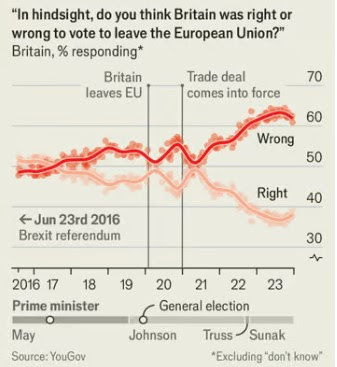
If a week is a long time in politics then ten years must be akin to the lifetime of the solar system. That's how long ago that a slight majority of British voters opted for the UK to leave the European Union. The polling today shows a roughly 60/30 split reckoning it was the wrong decision. Oops. I wonder if that's because Britain is poorer, or because there's an obvious threat from Putin and no help to be had from the mad cadre of posturing jocks now in power in Washington?

Oh well, no sense in crying over spilt milk. We can still get a kind of twisted fun out of the situation. What could be more British than laughing like a drain while circling the drain? And now our (well, my) fellow Europeans in France, Germany and Poland can get in on the act, as I'm releasing app versions of my gamebook Can You Brexit? to mark the 10th anniversary of the referendum.

(Apologies to the many EU countries I haven't done translations for, but even with the turbocharging of Claude Code I only have so much time. Still, as the game runs in a browser anyone can play it in their native language just by enabling Google Translate.)

Brexit: Können Sie Großbritannien zusammenhalten? is the German version:

Sie sind Premierminister des Vereinigten Königreichs, und der Brexit läuft. Ihnen bleiben exakt zwei Jahre, um eine über vier Jahrzehnte gewachsene Allianz rückabzuwickeln. Und das ist noch die einfachste Aufgabe. Ihr Kabinett gilt als schwer steuerbar, Ihre Partei befindet sich in fortgeschrittener Selbstzerlegung, und das Land ist in dieser Frage weiterhin zuverlässig gespalten.

Schaffen Sie es, durchzuhalten und Großbritannien sicher in den Hafen zu manövrieren? Neue Handelsabkommen rund um den Globus abzuschließen? Die heimische Wählerschaft zufriedenzustellen und zugleich das Wohlwollen Ihrer ehemaligen EU-Partner nicht vollständig zu verspielen? Die Wirtschaft davon abzuhalten, sich eigenständig in Richtung Abgrund zu bewegen? Und nebenbei jene Parlamentskollegen im Blick zu behalten, deren politische Loyalität erfahrungsgemäß keine feste Größe ist?

Ein Spielbuch, in dem Sie sämtliche Entscheidungen treffen. Was sollte da schon schiefgehen?

Brexit: saurez-vous sauver le Royaume-Uni? is the French version:

Vous êtes Premier ministre britannique et le Brexit est lancé. Vous disposez de deux petites années pour détricoter une alliance patiemment construite pendant quarante ans. Et ce n’est que le début du parcours d’obstacles. Votre gouvernement ressemble à une cour de récréation, votre parti se fracture un peu plus chaque jour, et le pays reste férocement divisé.

Saurez-vous tenir jusqu’au bout et ramener le Royaume-Uni à bon port ? Négocier des accords commerciaux aux quatre coins du globe ? Composer avec une opinion publique versatile tout en ménageant vos anciens partenaires européens ? Empêcher l’économie de partir en vrille ? Le tout en surveillant ces collègues parlementaires dont les couteaux affûtés brillent déjà dans la pénombre?

Un livre-jeu où vous décidez de tout. Franchement, qu’est-ce qui pourrait mal tourner?

Brexit: Czy wyprowadzisz Wielką Brytanię z UE bez katastrofy? is the Polish version.

Jesteś premierem Wielkiej Brytanii, a Brexit właśnie się rozpoczął. Masz zaledwie dwa lata, aby wynegocjować rozplątanie sojuszu budowanego przez ponad cztery dekady. A to dopiero początek pola minowego, które musisz przejść. Twój gabinet trudno utrzymać w ryzach, twoja partia rozpada się na kawałki, a kraj pozostaje głęboko podzielony w tej sprawie.

Czy zdołasz wytrwać i bezpiecznie doprowadzić Wielką Brytanię do portu? Wynegocjować nowe umowy handlowe na całym świecie? Pogodzić poparcie wyborców w kraju z życzliwością dawnych partnerów z Unii Europejskiej? Powstrzymać gospodarkę przed wpadnięciem w spiralę spadku? A przy tym pilnować tych kolegów z parlamentu, którzy tylko czekają z nożami w rękach, by wbić ci je w plecy?

To książka-gra, w której wszystkie decyzje należą do ciebie. Cóż może pójść nie tak?

If you spot mistakes in the translations or any bugs in the game, let me know. At least those are the kind of blunders we can fix.

Wednesday, 27 November 2024

More deep dives into the future

Google's NotebookLM is my latest toy. I've been having a blast unleashing it on various books of mine, game write-ups, favourite novels, etc, and listening to the podcast discussions it generates. They're not perfect -- a bit repetitive, and sometimes the virtual hosts get the wrong end of the stick, but this is still in experimental mode. Imagine what it will be like in a couple of years. And NotebookLM also has a serious use as a tool for writers. That's my excuse for playing with it, anyway.

Here are a few of its analyses; you'll need a Google account to listen to them.

Can You Brexit (Without Breaking Britain)?

"Can You Brexit is a political thriller that follows a fictional British prime minister as they navigate the complexities of Brexit negotiations. The book explores a variety of potential Brexit outcomes, including a 'hard Brexit' where Britain leaves the European Union and the single market, a 'soft Brexit' where Britain leaves the EU but remains in the single market, and a 'Swiss model' where Britain has a more limited relationship with the EU. The book delves into the internal political pressures the player faces as they attempt to negotiate a Brexit deal that satisfies both their own party and the British public."

Listen to the Deep Dive discussion here.

The Conclave 

"The story follows a group of wizards on a quest to find a prismatic jewel in a labyrinth on the island of Tartuva. They are hunted by a powerful adversary named Pale, who seeks to erase all names in the world. The wizards are aided by various spirits, including Surma, a wizard who is worshipped as a god, and Wax, a shaman who can communicate with the dead. The story highlights the importance of names in the world, and the struggle between those who seek to control them and those who seek to preserve them."

Listen to the Deep Dive discussion (admittedly with a few hallucinations about the plot) here.

Dark Lord: The Early Years

"The story of Dirk Lloyd, a young boy who believes he is the Dark Lord transported to Earth by a magical mishap. While he grapples with his new reality, Dirk tries to adapt to life as a human child, and plots to reclaim his powers. The novel delves into themes of identity, power, friendship and good versus evil, with a darkly humorous tone."

Hear those puny mortal AIs talk about the great Dirk here.

Down Among the Dead Men

"The story follows the player-character as they navigate treacherous seas, battle pirates, face undead monsters and ancient demigods, and ultimately try to rescue Queen Titania from the clutches of the villainous Captain Skarvench."

Listen to the Deep Dive discussion here.

Dragon Warriors

"From the medieval-inspired kingdom of Albion to the exotic Ta’ashim lands, the game portrays a vibrant and diverse world with distinct societal structures, belief systems, and unique inhabitants."

Here are the automaton town criers to tell you all about it.

Florien

"Diana encounters a mysterious and alluring young man called Florien. The novel is characterised by a romantic and supernatural tone, with Florien appearing and disappearing at will, leaving Diana to wonder about his true nature and his relationship to the girl, Janice, who lives in a dark and forbidding manor house. It explores themes of obsession, captivity, and the allure of the dark and dangerous, particularly Diana's attraction to Florien and his mysterious and potentially sinister nature."

See what the Deep Dive hosts made of it here.

The Hammer of the Sun

"The Great River lies barren, its lifeblood drained by an ancient curse. Journey through scorching sands and forgotten ruins, where sphinxes guard lost secrets and skeletal Spartoi wage perpetual war. Explore a vast open world where brooding sphinxes, proud Amazons, and forgotten gods cross your path. Uncover the mysteries of Iskandria, a once-great city now lost to time, and face challenges that will test your courage and cunning. Seek out mythical creatures, confront deadly foes, and collect powerful artifacts as you race against time to restore balance to the land. Will you become a legend, or be forgotten beneath the relentless hammer of the Sun?"

Listen to the Deep Dive discussion here.

Lifeform Three

"The story of Paftoo, an artificial 'bod' in a dystopian future who works at Harkaway Hall, a nature reserve created from the ruins of a lost civilisation. Paftoo has no memory of his past, and his life is a constant cycle of work and night mode, where his mind is wiped clean. The novel explores themes of memory, identity, and the nature of reality as Paftoo tries to piece together fragments of his past and understand the true nature of the world he lives in."

Watch the bods discuss it on YouTube.

A Minotaur at the Savoy

"A series of letters sent to the Royal Mythological Society from individuals across the globe, detailing their encounters with fantastical creatures and events during the Year of Wonders, a period in which the lines between reality and imagination became blurred. The letters are a mixture of the mundane and the extraordinary, with correspondents reporting on everything from mischievous fairies and shape-shifting demons to giant birds carrying people off to ancient palaces. The letters serve as a humorous record of this extraordinary time, offering a glimpse into the impact of fantastical occurrences on everyday life."

Listen to the Deep Dive hosts talk about it here.

Necklace of Skulls

"The adventure involves the player taking on the role of a Mayan character searching for their lost brother in a fantastical mythological realm, encountering various challenges and finally confronting the semi-divine mage Necklace of Skulls, who may or may not be an aspect of the god of death."

Listen to the Deep Dive discussion here.

Richer source material typically inspires the AI to give a more interesting discussion. There's more depth to a novel like Lifeform Three than you'll find in any gamebook, even Heart of Ice. On the other hand, here's a case of our virtual hosts rising to a seemingly impossible challenge and acquitting themselves well.

Wednesday, 25 September 2024

March? But it's September!

If you live in Britain and you aren't the sort who feels like looting shops and chucking bricks at the police in response to a school stabbing tragedy, and if you deplore the cheapening of British politics by the Trump-wannabes of Reform UK, you might want to register your support for a more international and inclusive worldview by coming to London on Saturday for the Rejoin EU march. (Strictly a peaceful and civilized affair, this, so angry old gammons may prefer to stay home and wrestle their XL bullies.)

If marching isn't your thing, there's an open letter you can sign. Or, if you're interested in the whole UK/EU question but don't have a strong view either way, or even if you still think Brexit could work out fine, you could just play Can You Brexit? and see how you get on. (Hint: if you just make decisions at random you'll still do better than the Tory governments of the last eight years.)

Still, we're all for evidence-based reasoning here. No ideology counts a jot against hard facts, so be sure to fully research the subject before you form an opinion, and be ready to update your opinion if the facts change.

Friday, 21 June 2024

Silver linings

Eight years ago almost to the day, a referendum in the United Kingdom voted 52/48 to leave the European Union. Regular readers cannot fail to have noticed that I was one of the 48% (nowadays more like 63%). I didn't imagine I could know in advance whether the eventual outcome would be good or bad, but I do know that extreme perturbations to complex systems (like modern societies, for example) can have highly unpredictable results. Unless the current state of such a system is catastrophically bad to the point of imminent failure, it never makes sense to make revolutionary changes rather than gradual ones. There were indeed British communities where people figured their situation literally couldn't get any worse. I couldn't even start to get my head around such thinking until I watched this, given that median wealth in the UK is twenty times the median wealth globally, though I tried to keep my own preferences (some would call them prejudices) out of the way enough to ensure that Can You Brexit was an even-handed look at the pros and cons.

I strive for an open mind on all issues, so it's only right to admit now that it's not all been bad news since the referendum. Admittedly the UK is considerably poorer as a result of leaving the EU's single market -- unnecessarily so, too, as the Norway model was an oft-touted Brexit plan among the more moderate of the Leave campaigners. But there are upsides. Immigration into the UK has increased since the Brexit vote and, contrary to the beliefs of the ship-'em-to-Rwanda mob, those immigrants are integrating well into British life and bring valuable skills, energy and culture. New citizens are also now coming from a wider diversity of backgrounds rather than just Europe. So that is good news, albeit the opposite of what most of the people voting Leave actually wanted.

By the 2010s the UK had long been in need of a way to break the old political mold. The main parties stood for fossilized versions of the socioeconomic classes of a century ago, not today's class structure, but Britain's first-past-the-post voting system prevented any reconfiguration of the parties to fit modern UK society. The Brexit vote had the effect of radically shaking up what the main parties stand for. The electorate would have done better to switch to an instant-runoff voting system when they had the chance in 2011, but that became another of history's missed opportunities. (See also the US Presidential election of 2000.)

Also, Britain seems to be escaping the trend towards nationalist populism (indeed, let's just call it fascism) that's surging across Europe. The British Isles have always been stony ground for fascists, and the Britain First party (whose leader has publicly supported lynch mobs) are faring no better among voters than Oswald Mosley's lot used to. Meanwhile, although the slightly less toxic Reform Party has been climbing a bit in the polls, that rise is largely matched by the decline in the Conservative Party's fortunes. Between them, Britain First and Reform are effectively Britain's far-right Tea Party/MAGA movement, liable to get noisily vexed about any measure that's even halfway sensible, informed, decent or rational. The greatest shame about their electoral alliance is that it's sullying the good Whig name of Reform, but eventually their supporters will get absorbed back into the Tories where their reactionary stridency will be dulled to a general grumble of dissatisfied resentment at the modern world. The example of Poland shows what harm can be done to the mechanism of state once you let people like the PiS stick their finger on the scales, but that threat seems far greater in many EU countries (and across the Atlantic, sadly) than in the UK.

Europe needs to worry about defence, of course, and while I preferred the days when Churchill could sell the concept of the Declaration of Union, post-Brexit Britain at least didn't vacillate in supporting Ukraine against Putin's invasion. It might make more sense to have a truly united European front, especially if Ukraine falls and Putin starts hoovering up the former Soviet states, and given that the next US President (and maybe the next French government) might be more pro-Putin than pro-NATO, but there's little sign that the EU as a whole is more alert to that threat than Britain is.

In another eight years, will I say that the Leave vote was a good idea? Steady on there. I'd still prefer my Enlightenment dream, but that might be one to put alongside the Mars colonies and controlled fusion for everybody and the von Neumann probes equipped with strong AI. At this point I'll settle for a world with fewer despots and more equality, and if getting that means distracting populists with some shiny trinkets like Brexit then so it goes.


Cambridge Econometrics analysis of the effects of Brexit (PDF)
Post Factum analysis of the pros and cons of Brexit as of summer 2024

Tuesday, 12 September 2023

When countries go bonkers

It's been seven years since the United Kingdom narrowly voted to leave the European Union, of which it had been a leading member since 1973. This is usually nowadays referred to as Britain's Brexity McBrexitface moment.

What happened next? Those who subscribe to the idea that stories emerge as a series of dominoes falling in a cascade of events will have been interested and sometimes surprised - but not very surprised. It was obvious that Britain's ruling party would drift ever rightwards, colonizing the appeal-to-worst-natures territory staked out by the crackpot "UK Independence Party". Also obvious was that in trying to implement a bad idea with no plan, the Conservatives would suffer continual upheavals, internecine struggles, and desperate intrigues culminating in the blackly comical farce of a government led Boris Johnson followed by the utter madness of Liz Truss's ideological cloud-cuckoo land. As Laura Kuenssberg of the BBC puts it in an in-depth retrospective analysis:

"Her spectacular crash and burn was the logical end point, perhaps, of six years of chaos when the Conservatives so often turned in on themselves - and turned on each other."

Nobody likes a smart aleck, so I won't say told you so, but a lot of that crazed political backstabbing is right there in Can You Brexit (Without Breaking Britain)? There's also the opportunity to see if a better solution might have been found -- probably, indeed, the kind of solution Britain will now stagger towards over the next decade via a series of patches and ad hoc agreements that leave it only slightly worse off than if the whole sorry nonsense had never happened. 

Brexit didn't have to be bungled. It would have been perfectly legitimate to interpret the referendum result as an endorsement of the kind of "soft" Brexit that had been peddled to the electorate by Brexit advocates like Michael Gove, who during the referendum campaign proposed an EEA model such as Norway and Iceland enjoy that would have kept Britain in the Single Market. Instead the ERG cadre of self-proclaimed "Spartans" warped the ruling party, making dedication to their extreme version of Brexit a test of ideological purity. And that's why the party ended up in the hands of a succession of incompetents, malcontents, chancers, nutcases and idiots until finally lurching back towards its current attempt to look like grown-up government.

Given that other once-serious governments might shortly be jumping into the moronic inferno of populism, gamers from all around the world might want to take a look at this book to see if there are lessons to be learned. See if you can navigate the storms of political infighting to deliver a solution to Brexit that actually works in the interests of the people of Britain rather than the string of ex-Prime Ministers now collecting a few hundred grand each time they get up and give an after-dinner speech. It's possible, but it takes a more responsible hand on the rudder than any of the UK's leading politicians were willing to apply.

Friday, 7 July 2023

It's called irony


I’ve been listening to a lot of podcasts over the last couple of years, to go with the long country walks of the covid era. One of my favourites (podcasts, not walks) looks at the books and authors Gary Gygax cited as influences on D&D. But, oh my, it can be wearing to hear genre fans blunder their way through an interpretation of what an author is saying. You'd think that reading fantasy and SF would open you up to ambiguity and nuance, but instead those readers are often the most insistently literal.

Take this episode about Lin Carter’s The Warrior of World’s End. Xarda the knightrix (sic) says: “Knighthood promises a colourful and exciting life of action, such as every red-blooded woman normally craves.” (26m 23s in.) But, the presenters solemnly go on to say, Lin Carter then undercuts this with a further passage: 

“Many folks would doubtless say that a lady knight is a strange thing, or an intelligent metal bird that flies, or an old geezer who covers his face with lavender smoke.” 

Oh no, the sexist hound. One of the presenters grumbles that “it’s putting a warrior woman in the same category as a flying bird and an illusionist with purple haze over his face as though it’s just as wacky and weird!” Oh yes, agrees another earnestly, those were the deplorable attitudes of the time.

Does anyone think that when Jane Austen writes, “It is a truth universally acknowledged…” that she is expressing her own personal view of the matter? Or that Hilary Mantel’s description of the Duchess of Cambridge as "a shop-window mannequin, with no personality of her own, entirely defined by what she wore” was intended as Mantel’s unfiltered opinion? Mantel should not have had to explain that she was employing irony; that is, using a variety of free indirect speech to convey and expose the attitudes she was criticizing.

I found the same thing in some reviews of my political gamebook Can You Brexit that complained about the snobbish and dismissive attitudes of the central character. Well, duh. That character was modelled on the senior Tory politicians of the day. If you disagreed with the tone of their inner voice, so too did I.

Authors do this all the time. Carter in that excerpt from The Warrior of World’s End is not telling us the attitudes of the 1970s – at least, that wasn’t his purpose. He is using a form of generalized free indirect speech to express the general astonishment at a female knight in terms that place us in the mindset of the people who inhabit his fantasy setting. The mechanical bird and the smoke-wrapped sorcerer are other characters in the adventuring “party”, incidentally, so it’s also self-aware irony on their part. But even when a sentiment like that is expressed in the narrator’s voice, it’s a technique writers use a lot, and usually to express precisely the opposite of their personal opinions. Unfortunately it seems like it’s wasted in genre fiction if the readers insist on taking every word literally.

Why it matters: you are missing nine-tenths of the value of fiction if you think that authors write simply to express personal points of view. The presenters of another podcast were vexed by how Arthur Conan Doyle could have believed in fairies having created the arch-rationalist Sherlock Holmes. "Doyle would regard seances and fairies as unknown science," theorized one. "He wasn't Holmes, he was Watson," countered the other. No, no, no. Authors aren't that careless. They don't typically just drop themselves into any one character but into all of them. I've written religiously devout characters, for example, and indeed stories that have a Christian message, despite being in real life an agnostic. Neither Jack Ember nor Estelle Meadowvane are me, though naturally they must have something of me in them.

(Incidentally, it seems like I'm really whaling on those two podcasts, but in fact they're both firm favourites of mine. They just happened to end up in the firing line when I was looking around for examples. But give them both a chance, do.)

I once wrote a vampire novel for a YA horror series. An editor at the publisher's office said, "There is a bookshop called Horniman's and the school is called Urnfield. I don't think the writer is aware of the connotations." What, I wasn't aware that those names might evoke themes of sex and death? In a vampire novel? What do publishers think authors do all day? We don't just slap this stuff down without any thought.

So, next time you're reading a book -- even a trashy fantasy adventure novel -- it might pay off to park your own assumptions and attitudes outside and dive in with the faith that the author is not simply some dope who unthinkingly uses his or her characters as mere mouthpieces for the -- shock horror! -- discredited views of the unsafe bygone era when the novel was written. Here is the finest literary podcast I know of, and one that will dispel any notion that "literature" has to mean difficult, or sombre, or even highbrow. Open your mind and even the humblest book might change your life.

Thursday, 5 August 2021

A close look at the Vulcanverse books


People have been asking about the Vulcanverse gamebooks (in a few cases even with a slight whiff of dudgeon) so I thought now would be a good time to answer a few FAQs.

Why are you writing these instead of getting on with more Fabled Lands?

The short answer is that the funds are simply not there to pay for everything required to do a Fabled Lands book. Even if we found a few spare months and wrote one, there’s also all the checking (oh, those flowcharts!), editing, and typesetting. And then we have to drum up cash to pay for artwork, a map and a cover.

The difference with Vulcanverse is that it’s funded by a multimillion-dollar company with blockchain transactions constantly pumping cash up its arm. The gamebooks are barely even small change to them, the equivalent of handing out bags with your brand logo on. They can afford to knock out five books – or rather, to finance Fabled Lands Publishing to do the books.

I get why people are disappointed. Obviously I’d rather work on my own thing than on somebody else’s IP, and you usually get a better book when the writer is free to let their imagination fly. But it doesn’t have to be one or the other. Paul Gresty is already working on Fabled Lands book 8. If I don’t find any paid work after finishing my stint on the Vulcanverse books, my first priority is the Jewelspider RPG, but right after that I figure I may as well start writing a new gamebook. That could be the long-planned Shadow King or it could be something else.

I’d need to run a Kickstarter to finance the art and production, and believe me the very thought makes my heart sink. Marketing and all that businessy stuff appeals to me about as much as drain-cleaning. But there’s no other way to raise the funds, so I’m just going to have to bite the bullet. Or do I mean plunger?

There's another lifeline for future Fabled Lands books, which is the CRPG from Prime Games. If that rekindles interest in the books and wins over new fans, completing the series could become a commercially viable proposition. We're hoping...  


Still, aren’t you doing a George R. R. Martin on us?

GRRM is certainly rich enough to just plough on and write all the Song of Ice & Fire books. I assume he takes time out to work on other things because he wants to stay creatively fresh. If he just tore through to the end it wouldn’t be very good. (You’ve seen the TV show? Like that.)

I hate abandoning a project. Backers on Patreon of my Jewelspider RPG have been patiently waiting a whole year for that. Jewelspider is emphatically not abandoned, but it has had to take a back seat to paying gigs. Still, the Patreon is financing artwork and at least when Jewelspider appears it will look all the better for the delay.

More heart-wrenchingly, I was unable to go on with my Mirabilis comic. Art is the killer cost there, and the publishers who were willing to take it on wanted indentured servitude and ownership of the IP forever. Other projects that are patiently waiting for my time: Abraxas and Tetsubo. They sit there half-completed but don't even enjoy the small but dedicated fanbase of Fabled Lands. Like my Brexit gamebook they are things that I'd be devoting my energy to if I could pick and choose my projects, but like Leonardo I have to work on what patrons demand, not on what pleases me.

If you are miffed about Vulcanverse gamebooks coming out when Fabled Lands is still unfinished, let me offer two arguments in consolation. First, FL is not unfinished in the way A Song of Ice & Fire is. There is no single storyline in FL, so it’s not like you can’t complete it. There are a very few quests from future books that tie back into books 1-7, and those aside the effect of having more books is simply to extend the borders of the explorable world. It’s like expansions on a videogame.

Also, unlike poor Mirabilis, FL is dormant rather than extinct. The last open-world gamebook I wrote was back in the ‘90s. Since then the only gamebooks I’ve done are Frankenstein and Can You Brexit? So you could see the work on Vulcanverse as me getting back into training. And by the way I needed it – my first Vulcanverse book overran by 900 sections and those sections are far wordier than FL. I’m learning again the brevity needed to pack a lot of quests into a 750-section open-world gamebook. So when I come off The Pillars of the Sky in theory I'd be fighting fit to tackle The Isle of a Thousand Spires. GRRM uses the same defence; the only difference between us is talent, wealth and looks.
 

How similar are the Vulcanverse books to Fabled Lands?

The rules are like a stripped-down FL system. You have four attributes: Charm, Grace, Ingenuity and Strength. Your scores in those typically range from -1 to +3, and you may have an item that gives a +1 or +2 bonus. Faced with a task like rolling a heavy stone (Strength) or sweet-talking a sentry (Charm) you roll two dice, add modifiers for your attribute score and any attribute-boosting item, and you need to equal or beat the difficulty.

Yep, you spotted it. Success is equalling or beating the difficulty. A slight difference from FL there. Also, a double 1 is always a fail and a double 6 is always a success.

What about Stamina? It doesn’t exist. In Vulcanverse you are either wounded or unwounded. When wounded you deduct 1 from attribute rolls. Told you it was FL-lite.

Another difference is how blessings work. You can have up to three blessings at once, and they are good for a single reroll on any failed attribute check.

How easy is it to die in the books?

Very hard. Hey, we know it’s not the ‘90s anymore. If you do get killed, resurrection is automatic except on a very few heroic quests, and you always get fair warning if you’re on a mission that you might not come back from.
 

What about the Vulcanverse world?

It’s not like Fabled Lands. Well, it’s probably quite a bit like FL book 10, in that the Vulcanverse is based on Greek and Roman mythology; you can read about that in earlier posts. It’s definitely FL-adjacent because the myths have been filtered through the brain of Jamie Thomson. (On the other hand, did Paul McCartney’s work with Wings feel like it was 50% Beatles, or was it something altogether different? The debate could go on for years.)

Jamie and I have worked separately on these books, as we did on Fabled Lands too; I wrote FL books 2, 3 and 6, he did the others. In the case of FL the end result was relatively seamless, but my and Jamie's Vulcanverse books are entirely different in tone, content, gameplay, writing style, structure and flavour. That's partly because we didn’t develop the groundwork together, but mainly because we’ve worked on our own distinct projects over the years. If you’re familiar with the Dirk Lloyd and Wrong Side of the Galaxy books, you’ll find Jamie’s trademark comedy genius running through The Houses of the Dead and The Wild Woods. Those also feature the D&D-ish high fantasy action-adventure momentum that made the Way of the Tiger books so memorable. (By the way, did I mention there's a Dirk Lloyd TV show on the way? It'll be the smash hit of 2022 and you heard it here first.)

It’s harder for me to identify my own style; Robbie Burns talked about that. I tend to go in for low fantasy, character relationships, dreamlike weirdness, surreal encounters, dry humour, horror and tragedy. Possibly you’ll notice those on display in The Hammer of the Sun and The Pillars of the Sky, my own contributions to the VV series, though less so in the latter because I’ve been asked to include more tie-ins from the Vulcanverse collectible card game. Still, you’ll be able to get a sense from these books, and particularly from The Hammer of the Sun, how any new FL gamebooks by me might play out.

Is there actually any purpose to your adventures?


Some people have grumbled that Fabled Lands doesn’t give you an objective to aim at. There, the whole point was that you’re living a life in a fantasy world and defining your own goals. What was I saying about it not being the ‘90s now? These days, the trend is to have a defined task like in a computer game.

With Vulcanverse, we’ve tried for a Witcher-like happy medium. There are lots of quests set in an open world like in Fabled Lands, and you can usually pick a side in any conflict. For example, in The Hammer of the Sun it’s possible to join the nomadic Amazons, and you can become their champion, and even take the throne the way Conan would (if he identified as female). But you can also get banished from the tribe, and if you reach a position of authority there are decisions you’ll make that will have a lasting effect on the world and the people in it.

Alongside all of those side-quests there’s a main storyline that connects across all the books and culminates in Vulcan City in book 5: Workshop of the Gods.


When are they out?

Hopefully very soon. The first two should be on sale a month from now (early September) and the next two before Christmas. And for once I'm leaving comments on, so if you have any other things you want to know about the Vulcanverse books, now's your chance.

Friday, 7 August 2020

The art of the possible


It was a pleasure and a privilege to be invited by Ralph Lovegrove onto his Fictoplasm podcast recently. Normally the structure of an episode involves Ralph reviewing a novel and then considering how it might inspire roleplaying games. Particularly recommended: Nineteen Eighty-Four, Mythago Wood, The Tremor of Forgery, The Chronicles of Prydain, Kill the Dead, The Eclipse of the Century, Lyonesse, and Elric of Melnibone. Talking of that last one, Ralph is currently embarking on a marathon read-though of Moorcock classics, so stay tuned.


A previous guest on the Fictoplasm podcast was my wife Roz Morris so to balance things out I guess Ralph just had to ask me. Tune in here for our long discussion which takes in Brexit (鎖国), Tetsubo (鉄棒), my planned Sparta RPG (Λ), Mirabilis (), Frankenstein (🧠), Tirikelu (₸), and of course Jewelspider (💎🕷 or 宝石クモ, take your pick). We also talk about politics, gamebook design, the Congo, Nazis, Sagas of the Icelanders, and roleplaying in soon-to-be-sunken lands from Abraxas to Lyonesse but I've got no kanji or other symbols for those.

Jamie mentioned after listening to the podcast that I came across a bit like Tony Blair at times. Apparently he meant because of my vocal inflection rather than my politics. I suggested we might do a regular Fabled Lands podcast. (Jamie would be the Gordon Brown of the partnership, presumably.) So far I haven't been able to convince him, but maybe if there's enough demand...